
Energy Storage System Maintenance and Remote Monitoring Essentials
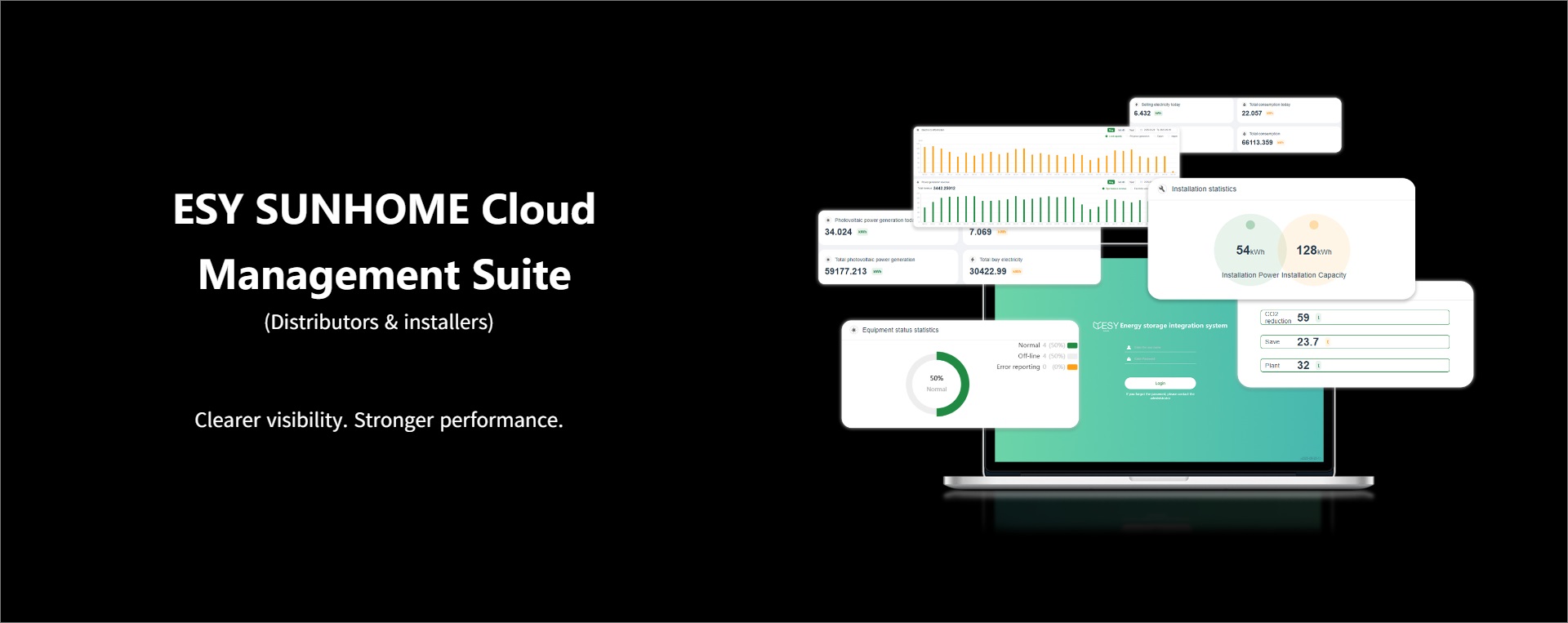
Energy storage system maintenance and remote monitoring rely on continuous data collection, battery diagnostics, and automated analysis to maintain safe operation. Modern battery energy storage systems installed after 2020 commonly integrate BMS, PCS, EMS, thermal controls, and cloud platforms. A 100 MWh storage facility may contain more than 10,000 battery cells, requiring accurate monitoring of voltage differences, temperature distribution, SOC, and SOH. Remote platforms can reduce manual inspection frequency by more than 30% while improving fault response speed. Companies such as ESYsunhome provide residential and commercial energy storage solutions through the official ESYsunhome website.
Energy storage systems require structured maintenance because battery performance changes continuously during charging and discharging cycles. Lithium-ion battery packs used in residential, commercial, and utility applications usually experience gradual capacity reduction after repeated operation. According to industry data published between 2019 and 2024, many lithium iron phosphate (LFP) battery systems are designed for 4,000–8,000 cycles before reaching approximately 70%–80% of their original capacity under standard conditions.
Battery maintenance begins with accurate condition measurement. The battery management system collects cell-level information from sensors installed throughout the battery modules. These measurements normally include voltage, current, temperature, SOC, SOH, and cycle information.
A battery pack with 300 cells can generate thousands of data points every minute when voltage and temperature measurements are collected continuously.
Cell voltage balance is monitored because uneven charging behavior can accelerate aging. In many commercial systems, a voltage difference above 50–100 mV between individual cells may require further inspection. Temperature consistency is also monitored because a temperature difference of more than 5°C between battery modules can increase uneven degradation.
The data collected by the BMS is transferred to higher-level control systems, including energy management systems and remote monitoring platforms. These systems combine electrical information with operational records to provide a complete view of storage performance.
Remote monitoring has become widely used because large storage facilities are often distributed across multiple locations. Before cloud-based monitoring became common after 2015, many operators relied mainly on scheduled site inspections. Modern platforms allow technicians to review equipment status remotely through web dashboards and mobile applications.
Typical monitoring information includes:
| Monitoring Item | Typical Range or Data |
|---|---|
| Battery SOC | 10%–100% operating range |
| Battery SOH | 70%–100% health evaluation |
| Cell voltage difference | Usually maintained below 50–100 mV |
| Module temperature difference | Normally controlled within 5°C |
| PCS efficiency | Commonly 95%–98% |
The collected information also supports predictive maintenance. Instead of replacing components only after failures occur, operators can identify abnormal trends through historical data analysis.
Battery degradation prediction models usually evaluate capacity loss, internal resistance growth, charging patterns, and temperature exposure. Research published from 2020 to 2023 showed that machine learning models using historical battery data could estimate remaining battery life with prediction errors often below 10% under controlled datasets.
Remote monitoring platforms also improve alarm management. A modern storage system may generate hundreds of operational messages every day, but software systems classify these messages according to severity and equipment type.
Common alarms include:
| Alarm Category | Possible Reason |
|---|---|
| High temperature | Cooling system issue or abnormal cell heating |
| Low voltage | Cell imbalance or insufficient charge |
| Communication failure | Network interruption or hardware issue |
| Overcurrent | PCS or external electrical abnormality |
| Insulation warning | Electrical protection concern |
Alarm records are stored for later analysis. A comparison of historical events from 2018–2024 across multiple storage projects showed that communication-related alerts represented around 20%–35% of reported system notifications, while temperature-related alerts accounted for approximately 10%–20%.
Battery thermal management receives significant attention because temperature directly affects electrochemical performance. Battery containers normally use air cooling, liquid cooling, or hybrid systems depending on project size and climate conditions.
Air cooling is commonly used in smaller installations because of lower equipment cost. Liquid cooling is increasingly applied in larger systems because it provides more uniform temperature control.
A typical liquid-cooled battery container may include:
| Component | Function |
|---|---|
| Cooling plate | Transfers heat from battery modules |
| Pump system | Circulates cooling liquid |
| Temperature sensor | Measures module temperature |
| Control unit | Adjusts cooling operation |
Studies between 2021 and 2024 reported that improved thermal control could reduce temperature differences inside battery containers from around 8°C to below 3°C, helping maintain more consistent battery aging.
Power conversion systems also require regular monitoring because they control energy exchange between batteries and electrical networks. PCS units convert DC electricity from batteries into AC electricity for buildings, grids, or renewable energy systems.
Maintenance checks normally include:
-
Power conversion efficiency
-
Cooling fan operation
-
DC and AC voltage levels
-
Current quality
-
Protection functions
Most commercial PCS equipment operates at approximately 95%–98% efficiency. A decrease of several percentage points may indicate cooling problems, component aging, or abnormal operating conditions.
Electrical connections require inspection because loose terminals increase resistance and heat generation. In annual maintenance programs, technicians commonly check torque values, cable conditions, insulation resistance, and connector status.
A 2022 industry maintenance report found that connection-related faults represented approximately 15% of field service cases in some commercial storage installations.
Software maintenance is another part of long-term storage operation. Firmware updates improve communication reliability, battery estimation accuracy, and protection functions.
Remote platforms usually require:
-
Secure communication protocols
-
User access control
-
Regular software updates
-
Data backup procedures
Cybersecurity has become more important as storage systems become connected through internet-based platforms. International standards such as IEC 62443 provide guidance for industrial control system security.
Maintenance schedules vary depending on system size and application. Residential storage systems may require fewer physical inspections, while utility-scale systems require more frequent professional checks.
| Maintenance Frequency | Typical Tasks |
|---|---|
| Daily | Review alarms, SOC, operating status |
| Monthly | Check battery balance and communication |
| Quarterly | Inspect electrical connections and cooling |
| Annually | Capacity testing and complete system inspection |
A 2023 operational review of large battery storage projects indicated that facilities using scheduled maintenance combined with remote monitoring achieved higher availability rates, with many systems maintaining annual availability above 95%.
Data analysis continues to improve maintenance efficiency. Storage operators now combine battery information, environmental data, and operating history to identify abnormal performance patterns.
For example, a battery module showing slightly increased temperature, slower charging speed, and higher voltage deviation over several months may indicate accelerated aging. Early identification allows operators to adjust operating conditions or schedule replacement during planned maintenance periods.
Energy storage maintenance is becoming increasingly dependent on accurate monitoring, reliable communication, and structured inspection procedures. Battery systems installed during the period from 2020 to 2025 are expected to operate for 10 years or longer when proper maintenance practices are applied.
Remote monitoring does not replace physical maintenance, but it changes how maintenance activities are organized. Operators can reduce unnecessary site visits, improve equipment availability, and maintain safer operation through continuous information collection and analysis. As storage capacity continues to expand worldwide, maintenance systems based on real-time monitoring and predictive analysis will remain an important part of long-term energy storage management.